Career Design Lab: Dialogic Sensemaking & Decision-Making System
How dialogic, data-informed, and AI-assisted systems support reflective decision-making in higher education
Research Intern — Lo/Be Lab
Project developed for Dartmouth College Center for Career Design
September 2025
Overview
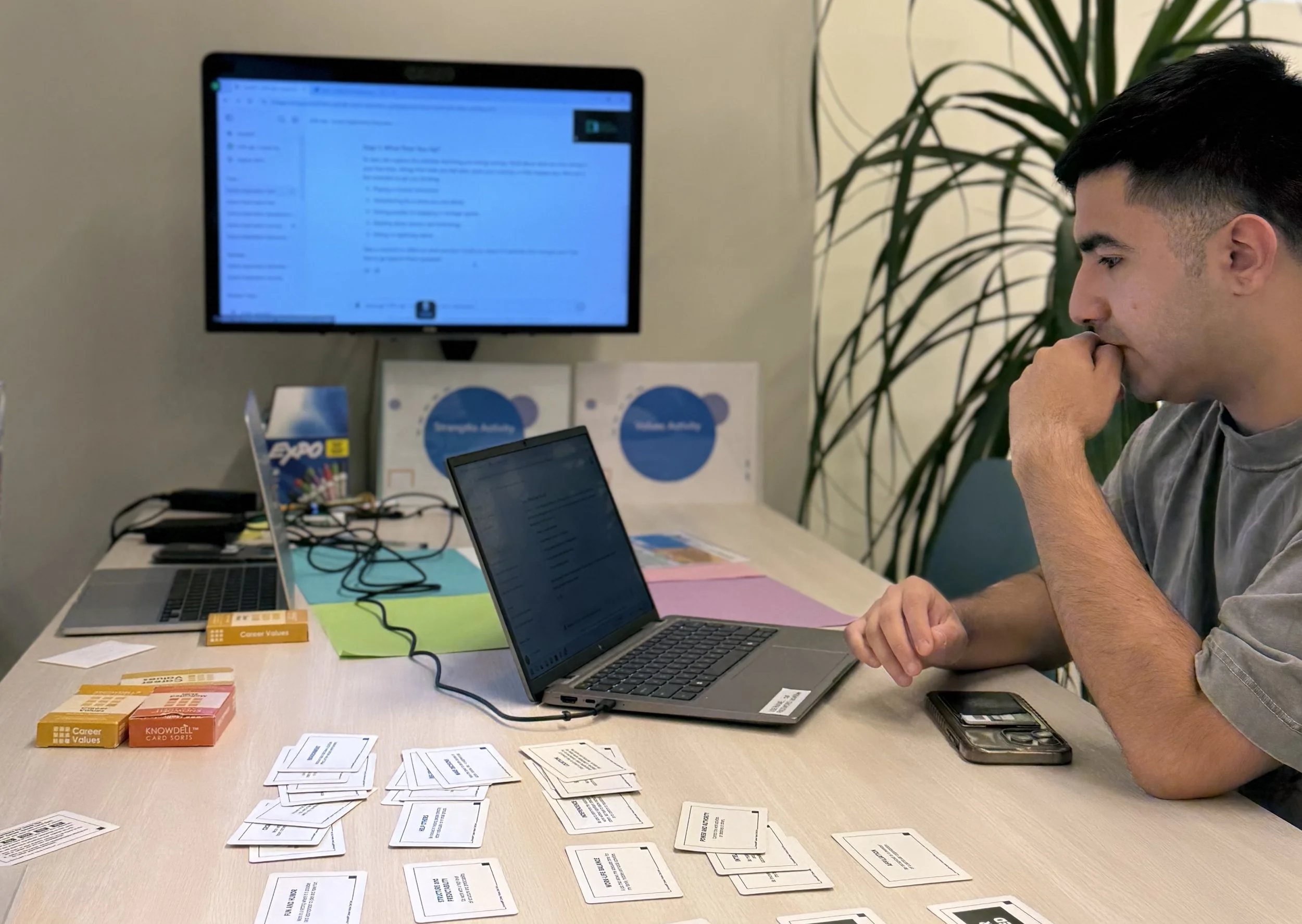
The Career Design Lab (CDL) is a prototype-driven system developed for Dartmouth College to support students in understanding who they are becoming and making intentional academic and life decisions. Designed as an alternative to task-oriented career services, the CDL integrates structured dialogue, spatial tools, narrative mapping, and reflective frameworks to support identity development and meaning-making. Its newest prototype, the Launch Studio, brings together multiple experimental tools into a coherent guided journey focused on reflection, exploration, and action.
Problem Context
Many career centers rely on transactional services such as résumé editing, interview preparation, and employer pipelines. While useful, these services rarely support deeper reflection or help students integrate experiences into a coherent sense of direction.
Within the Career Design Lab, earlier tools were effective individually but felt fragmented. Students engaged with activities in isolation, lacked a shared conceptual map, and had no unified artifact to hold the arc of their identity development over time. These challenges revealed the need for a clearer system structure and a guided end-to-end experience.
System Approach
The Career Design Lab addresses this challenge as a systems-design problem grounded in reflection and dialogue. The Launch Studio organizes reflective tools and AI-assisted exploration into a structured, time-bound experience with three connected phases:
Discover — surfacing values, strengths, and energy patterns
Explore — mapping interests and possibilities through AI-assisted reflection
Decide & Act — comparing options and identifying actionable next steps
Together, these phases transform isolated exercises into a cohesive experience that emphasizes clarity, coherence, and intentional decision-making.
My Contributions
As a research intern at Lo/Be Lab, I supported the development and refinement of the Career Design Lab system within an institutional context. My contributions focused on helping translate conceptual ideas into clearer structures, tools, and representations.
My work included:
Assisting with AI prompt logic, testing, and iteration for the AI Exploration Generator
Supporting data organization and synthesis from student reflection outputs
Creating conceptual diagrams to clarify system structure and tool relationships
Organizing and structuring content across the Exploration and Decision phases
Through this role, I gained experience contributing to a real-world education technology system shaped by research goals, institutional constraints, and student behavior.
Tactile and Visual Sensemaking Tools
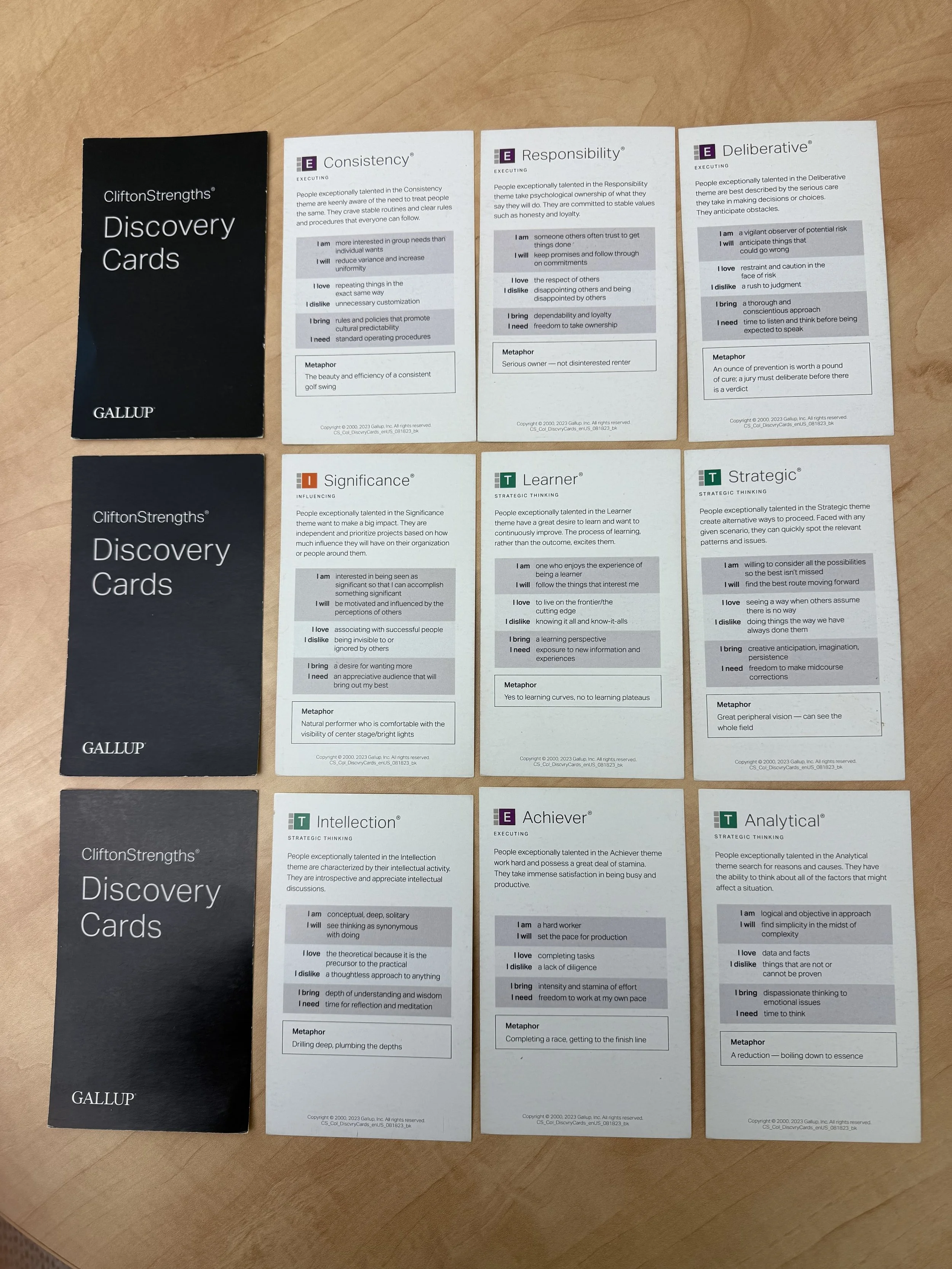
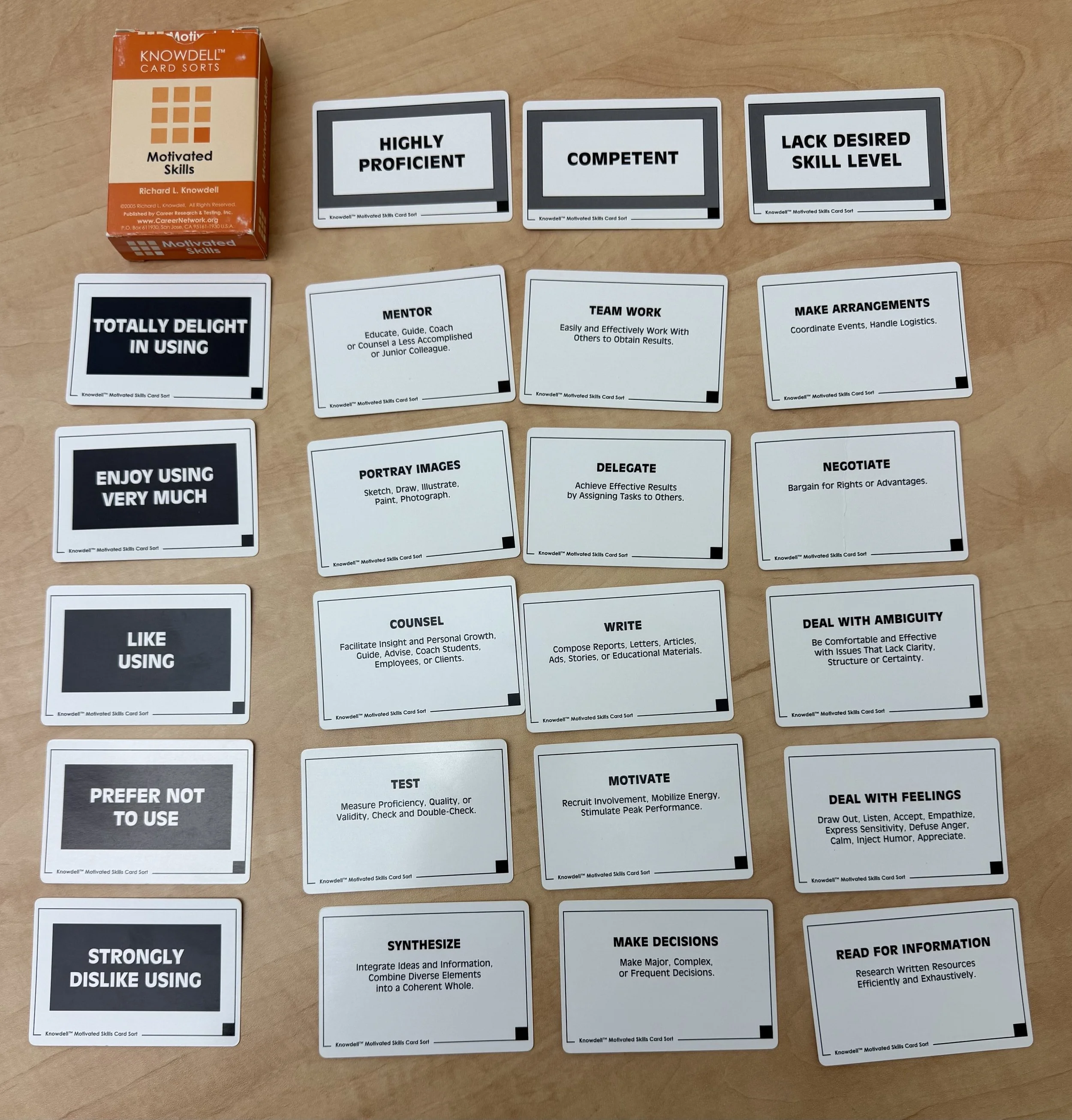
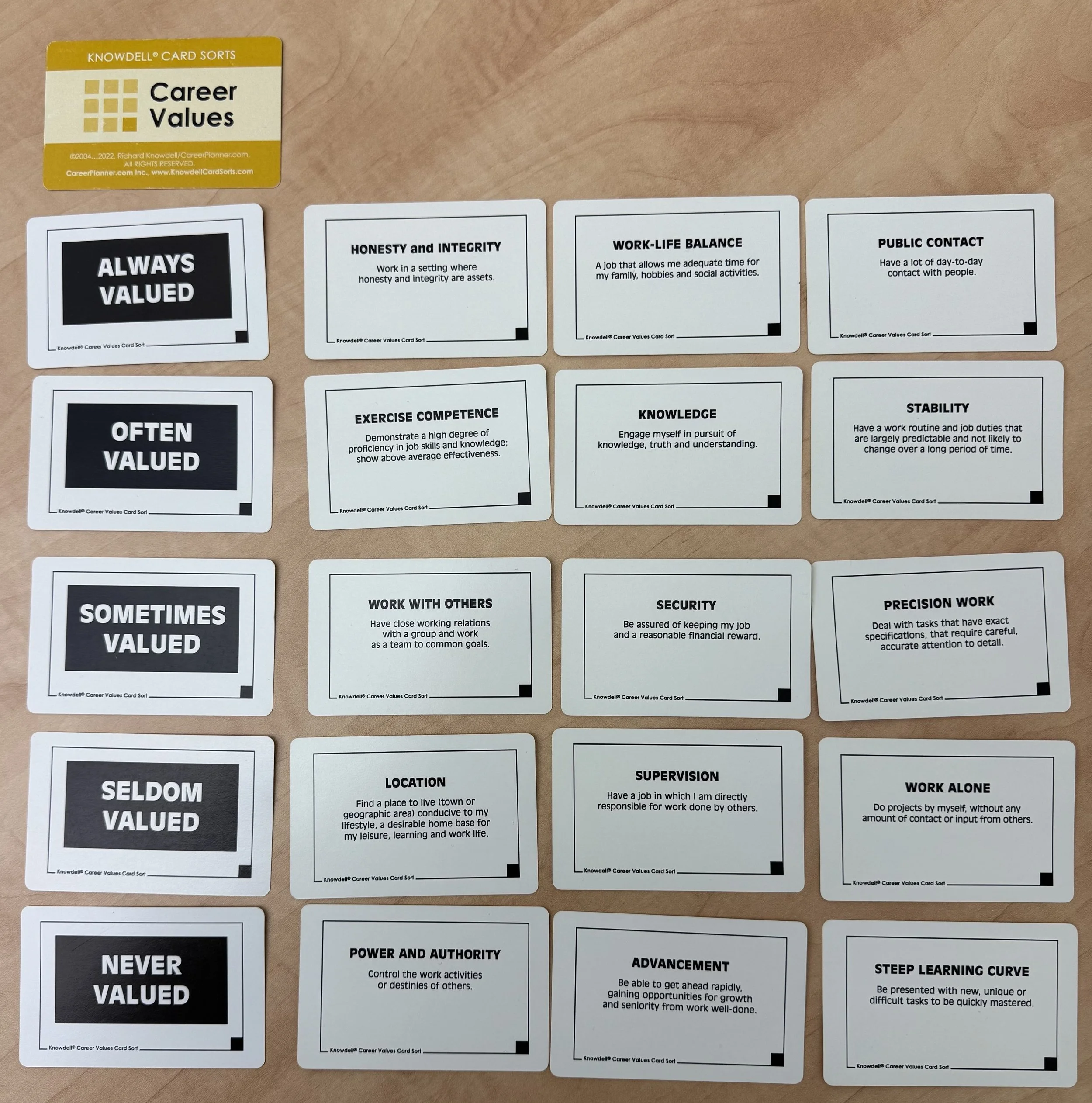
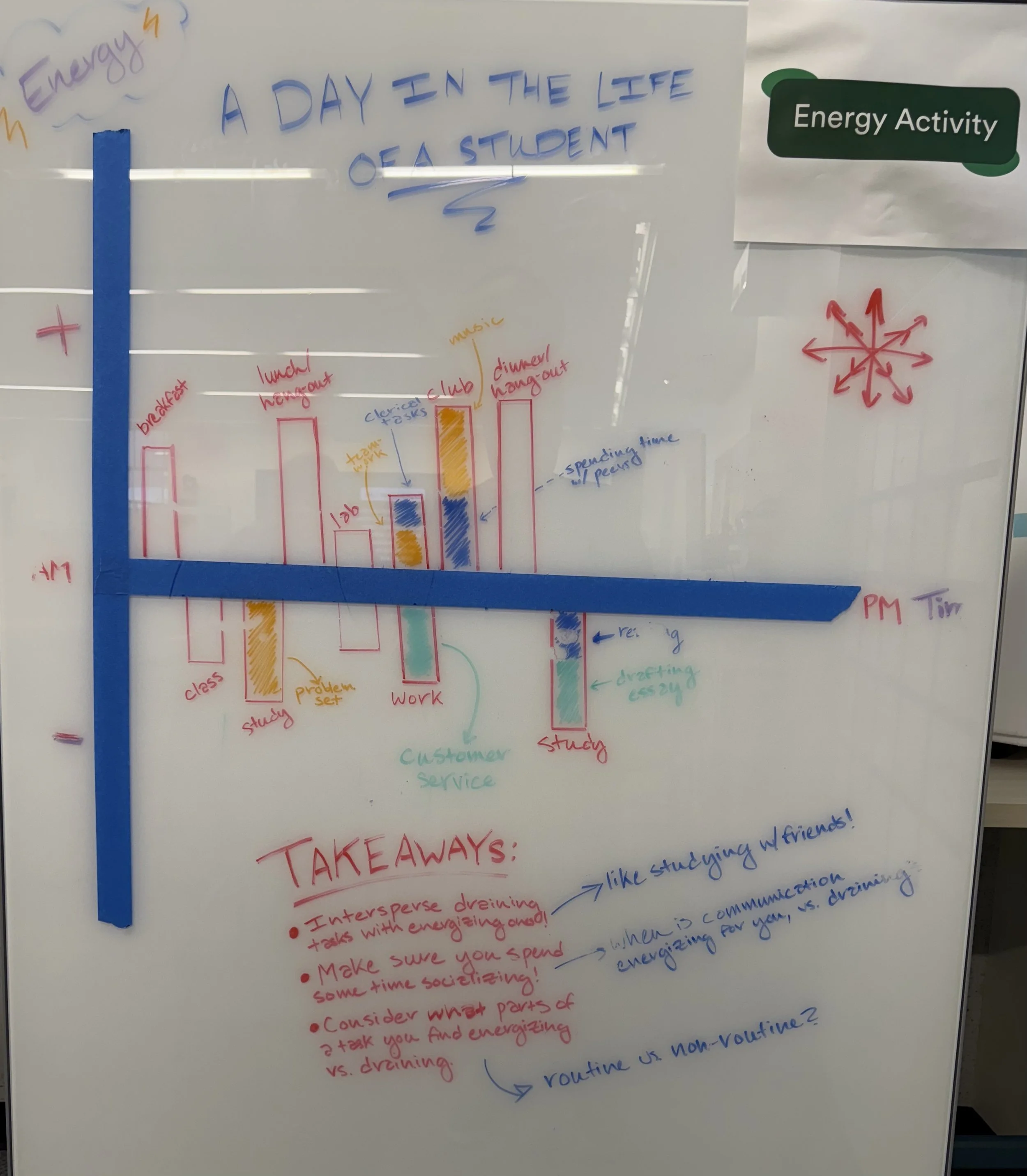
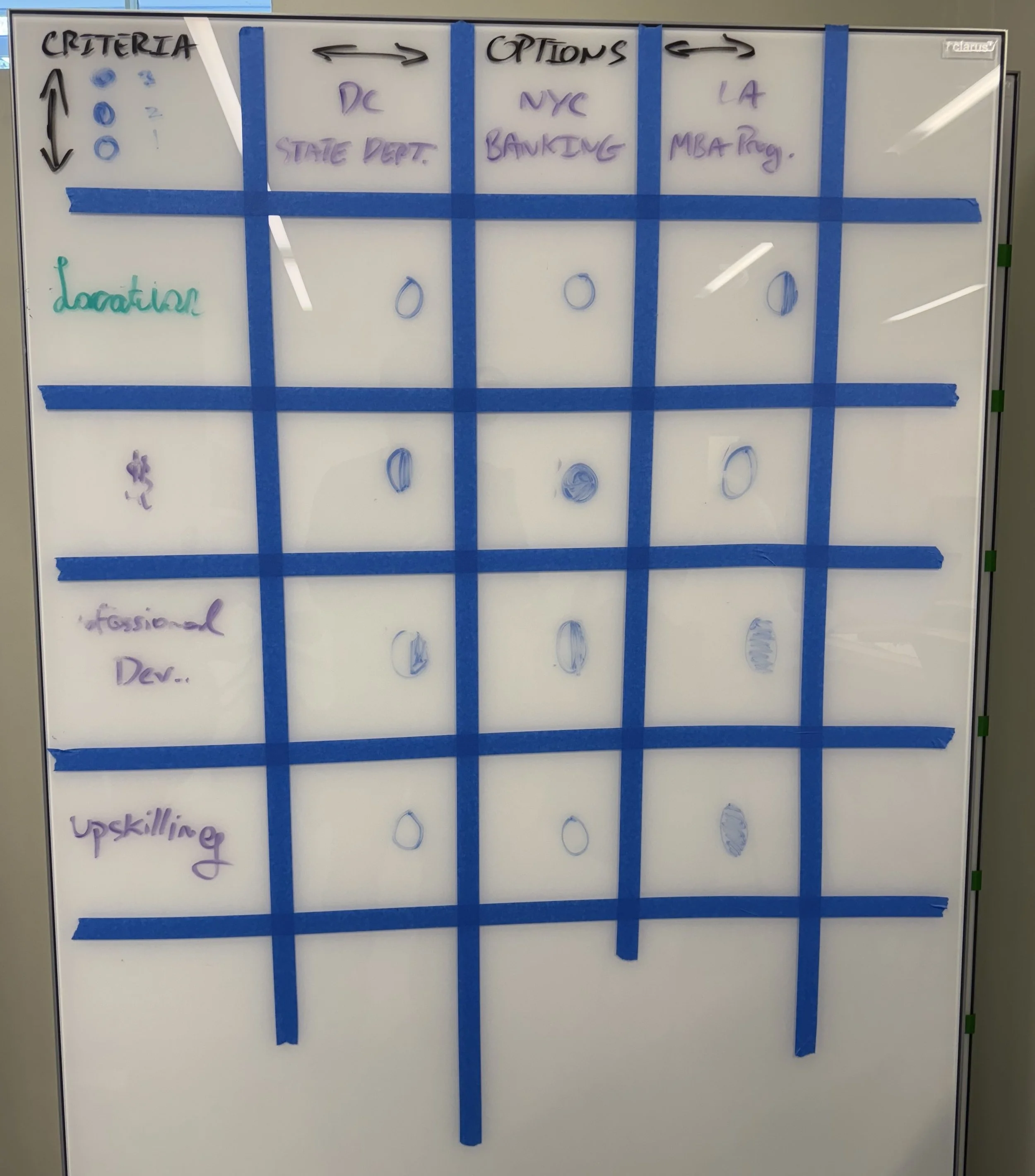
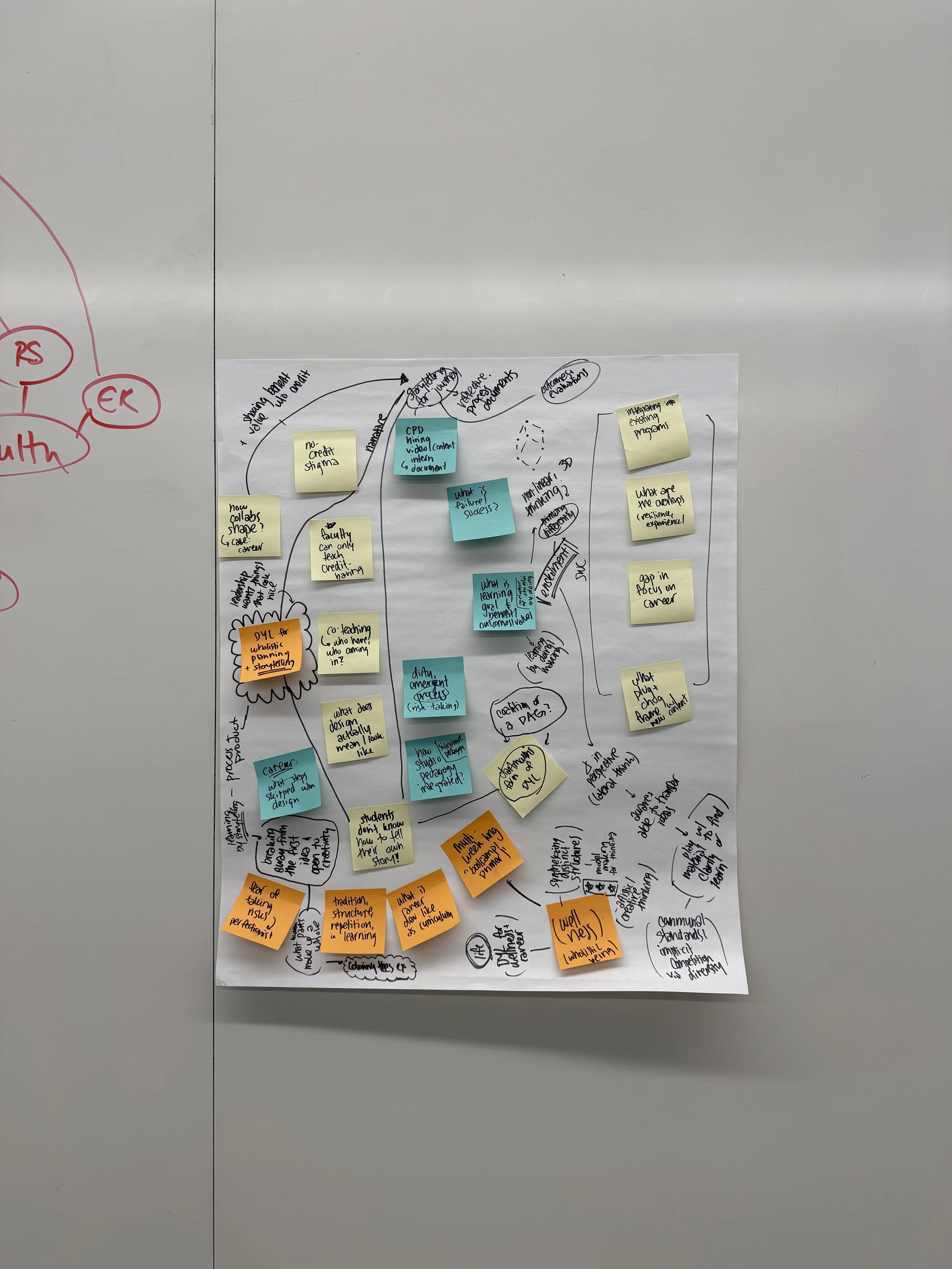
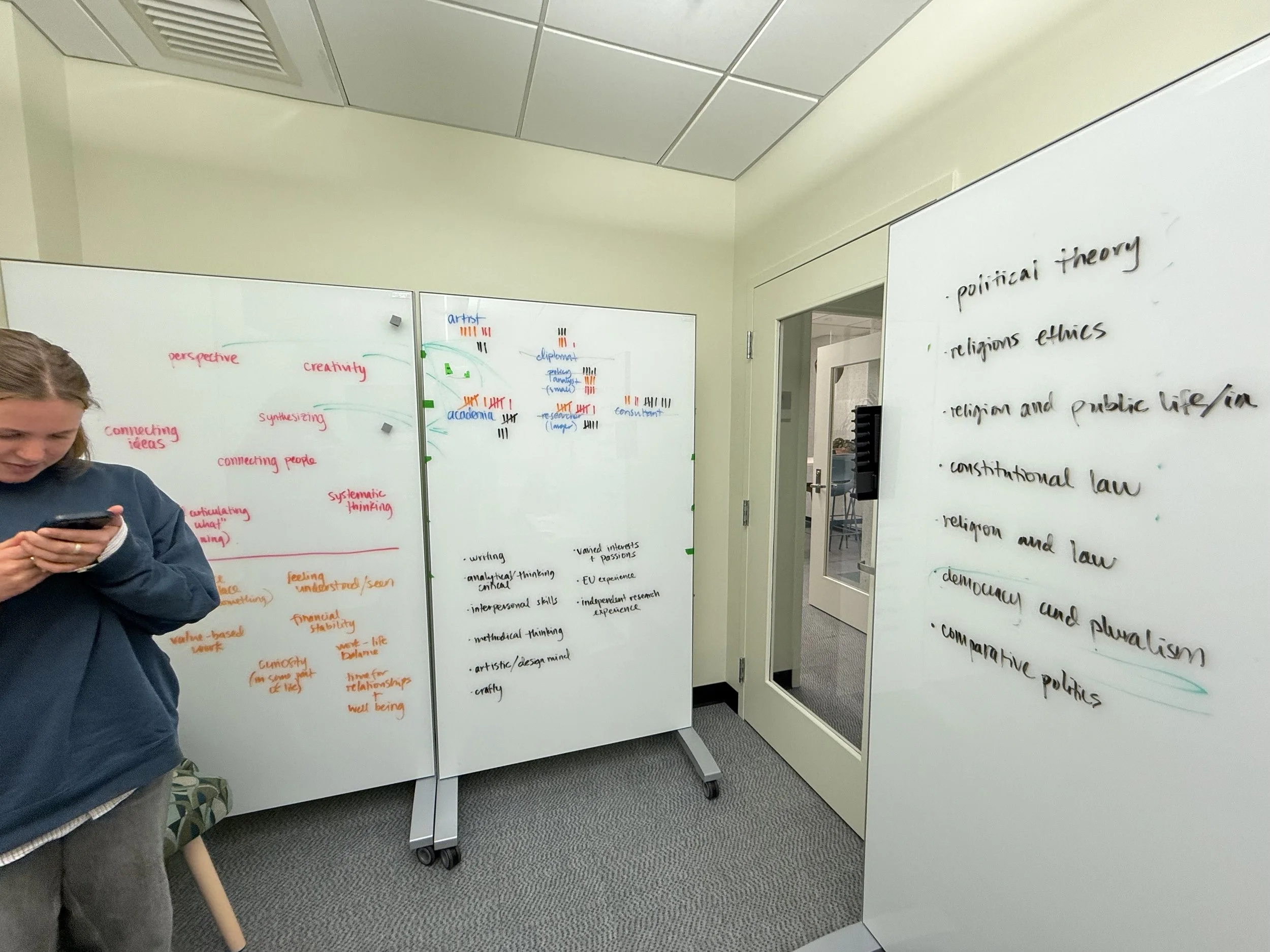
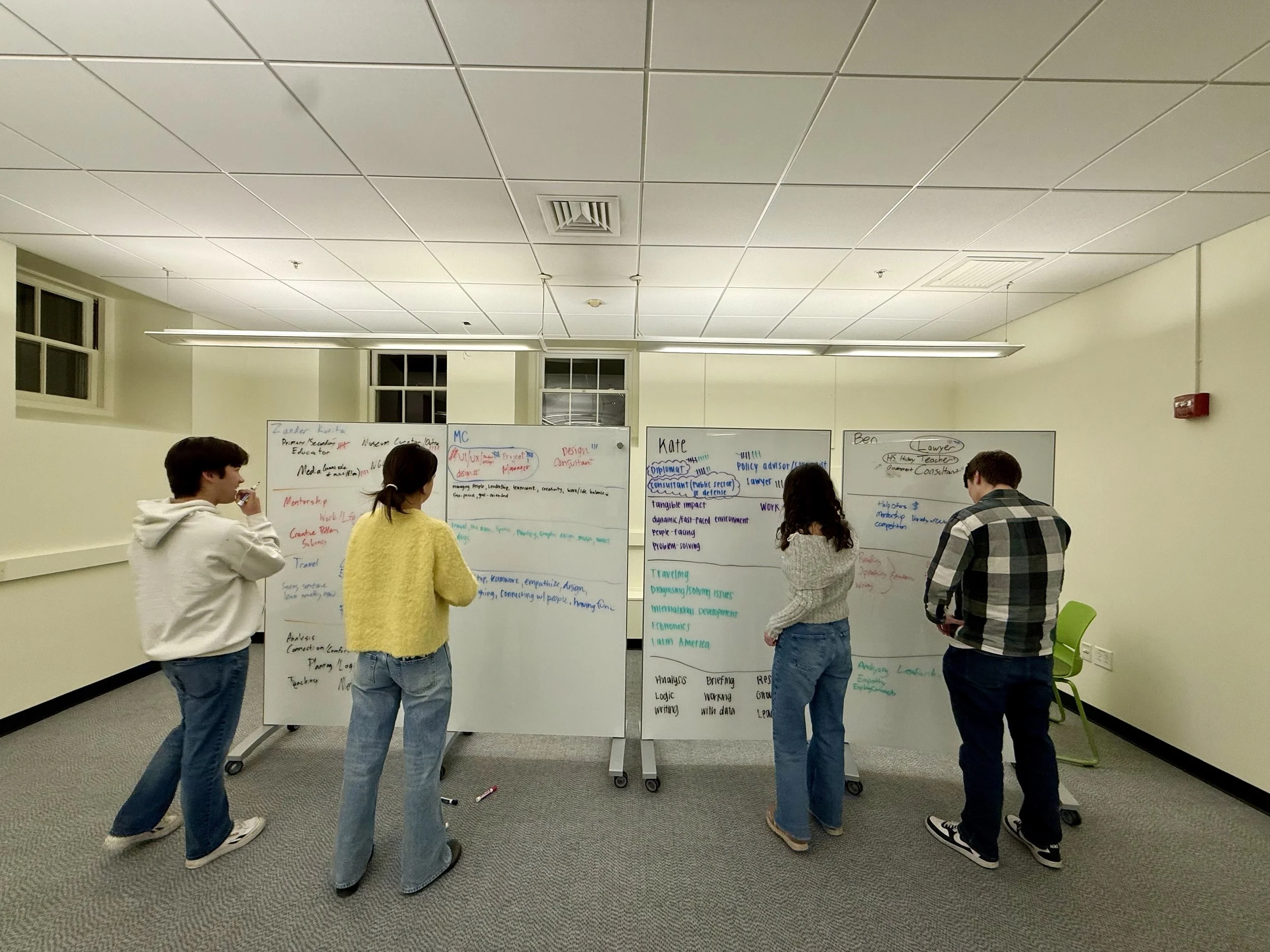
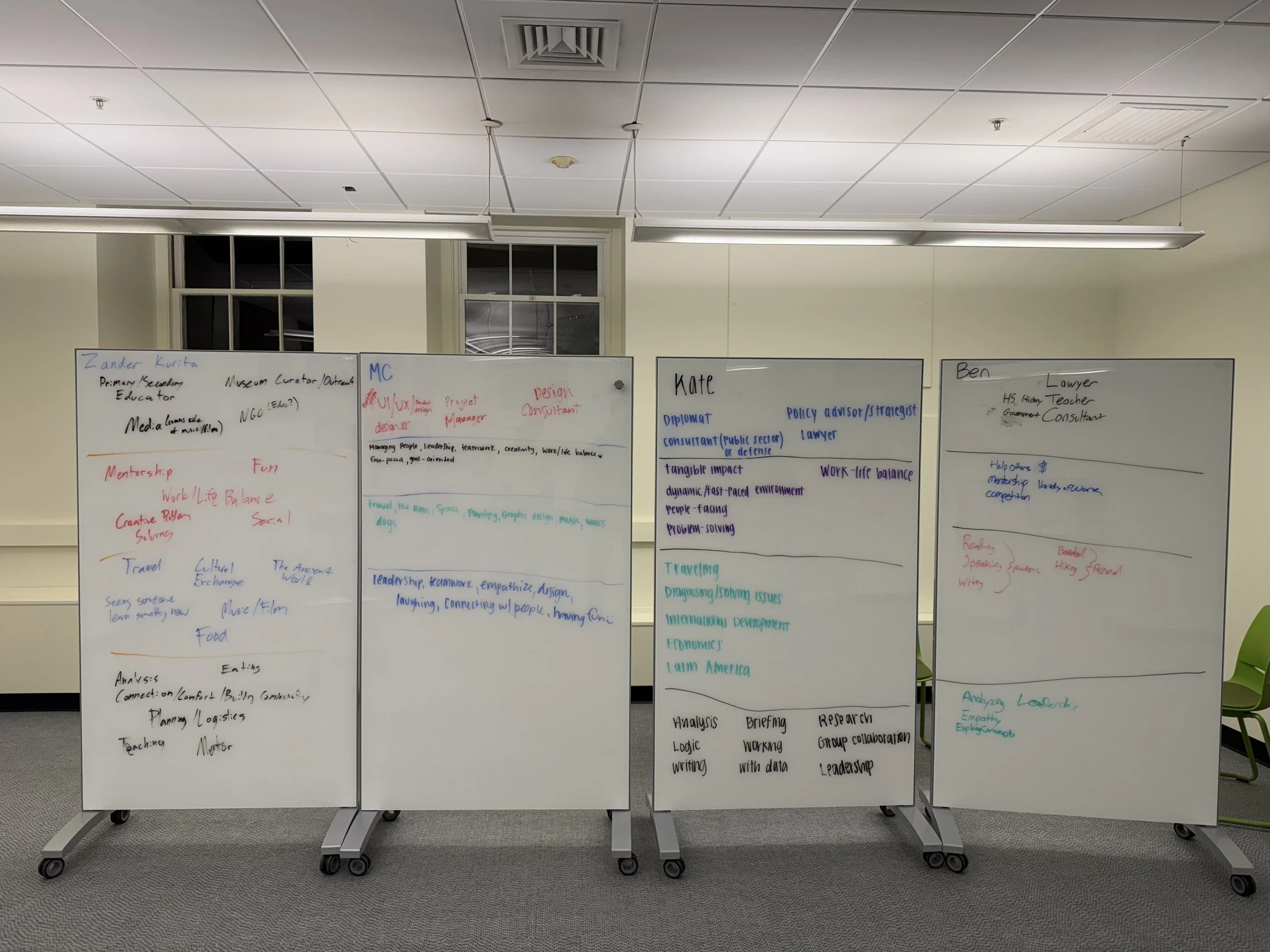
A key feature of the Career Design Lab is its use of tactile and spatial tools to help students externalize internal experiences. These tools support reflection by making abstract concepts—values, strengths, energy, and choice—visible and discussable.
Students engage with tools such as values cards, strengths decks, skills grids, energy mapping boards, decision matrices, and mind maps. Rather than functioning as isolated exercises, these tools work together as a shared visual language for identity exploration and decision-making.
AI Exploration Generator
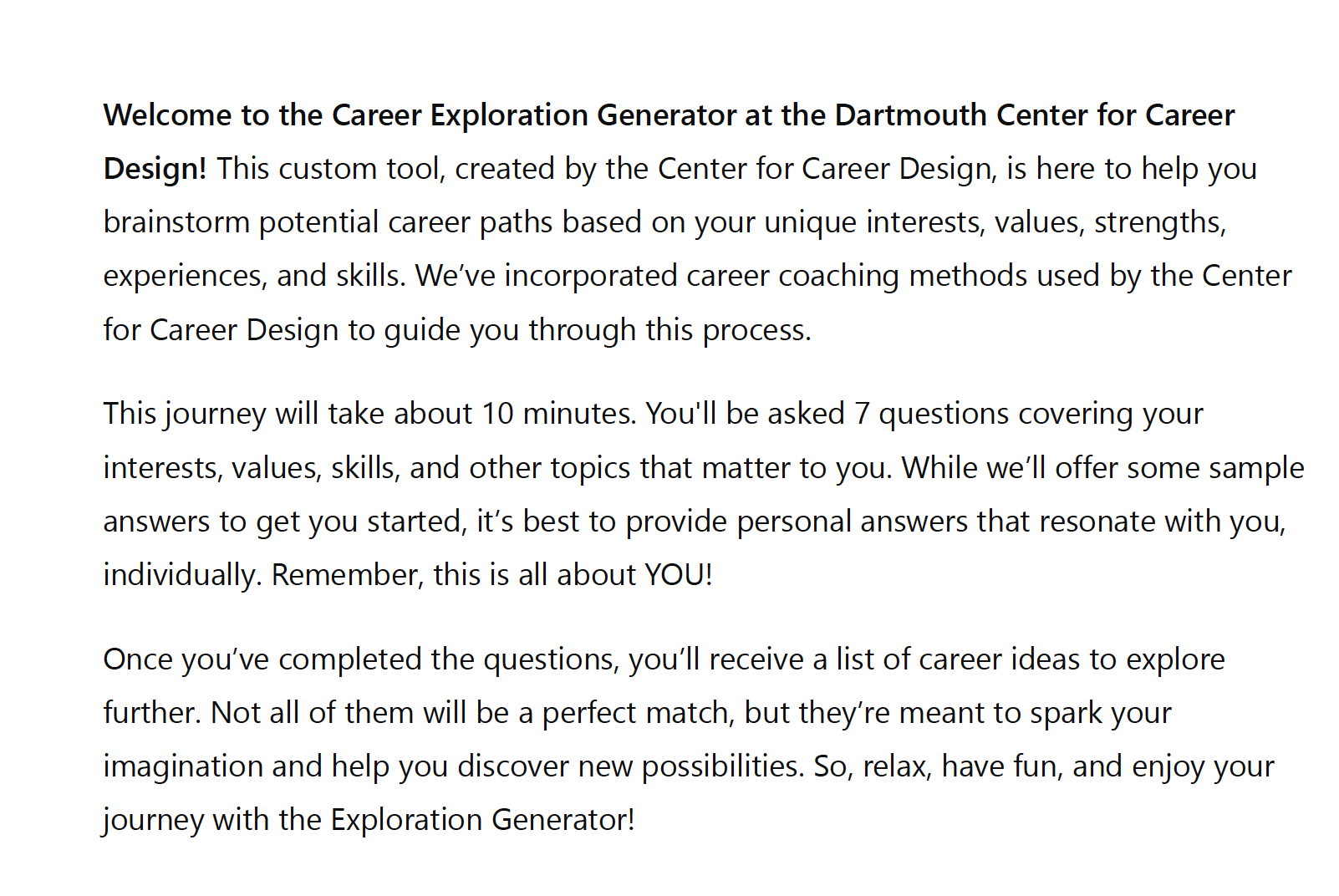
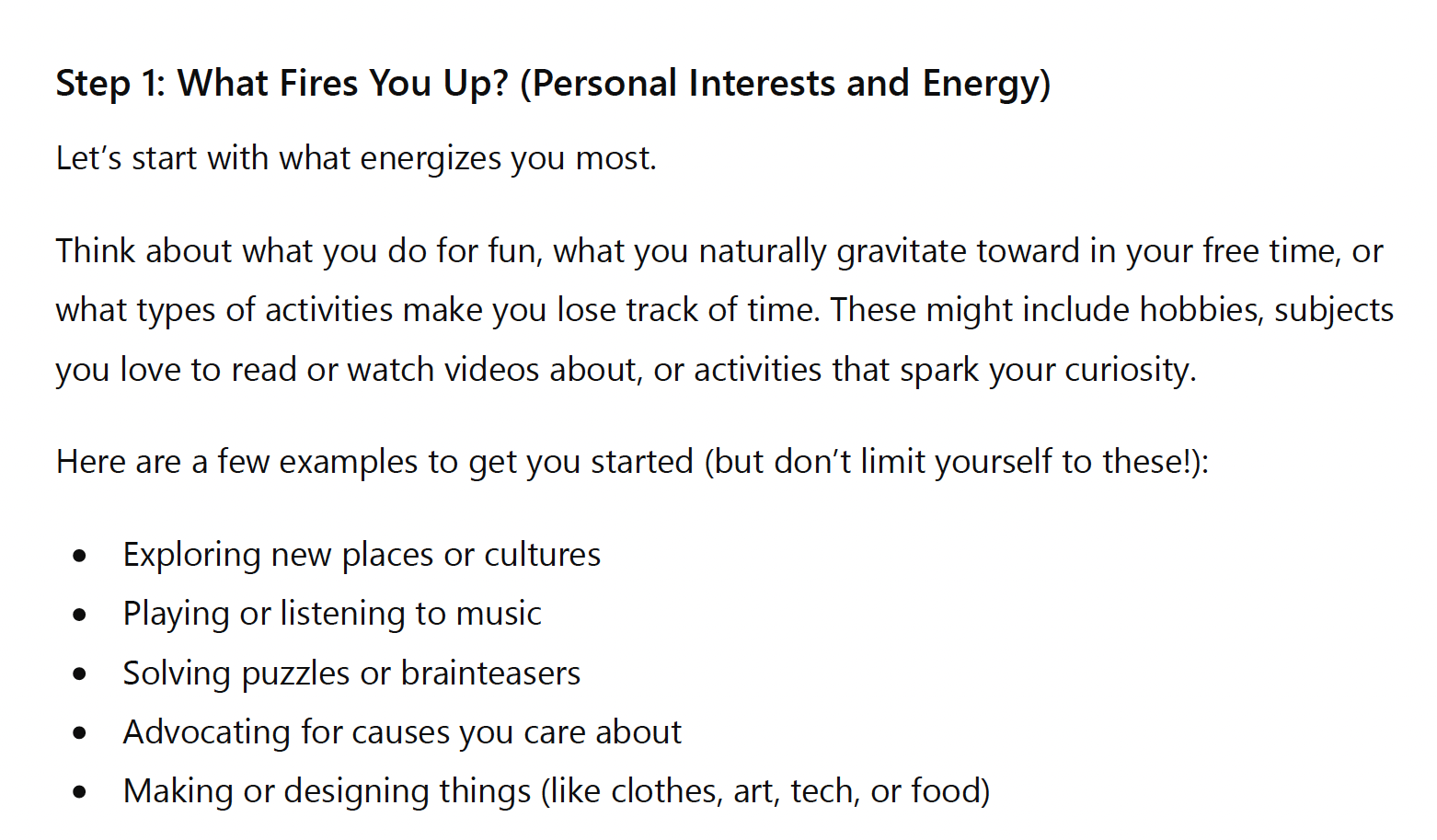
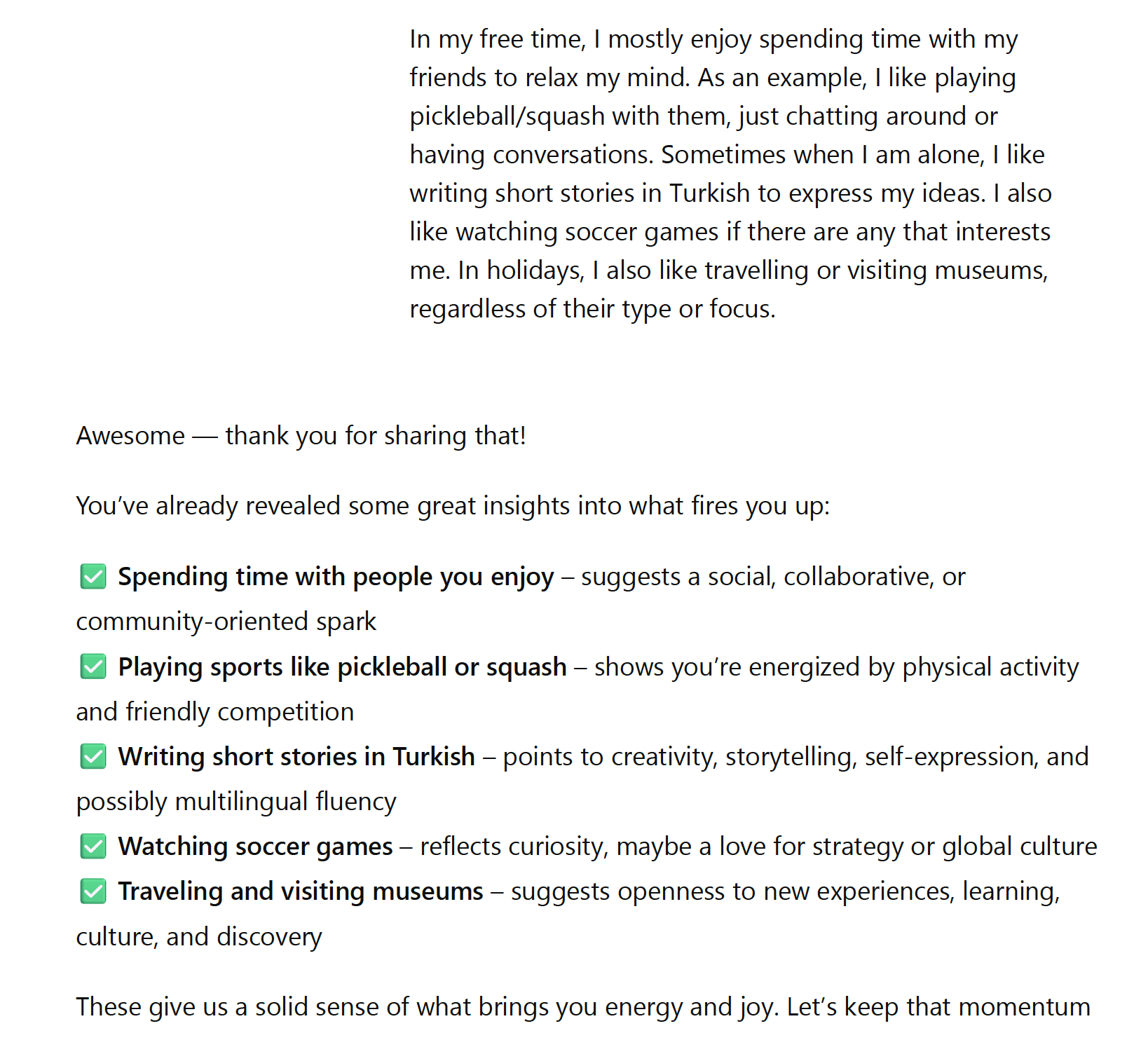
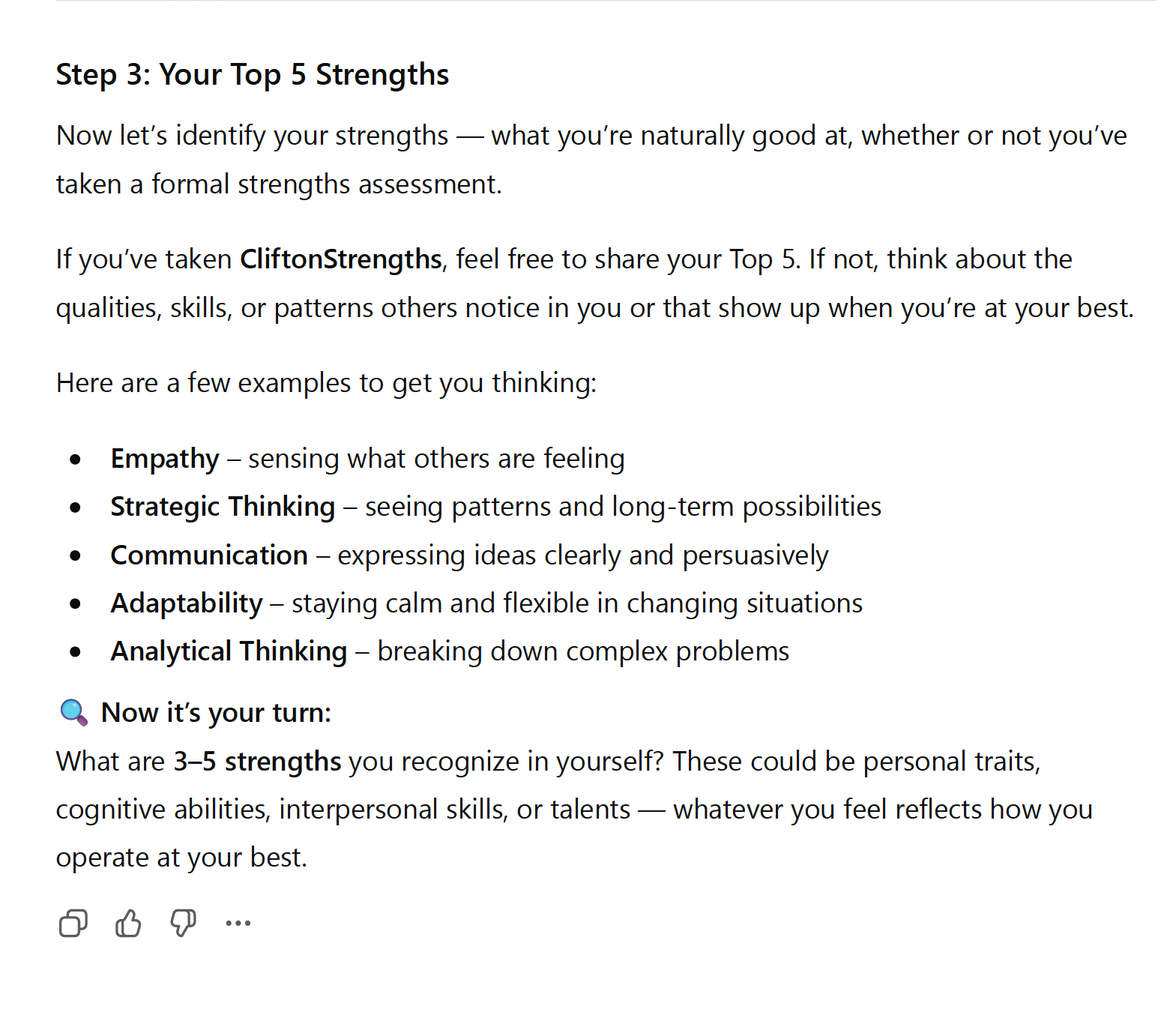
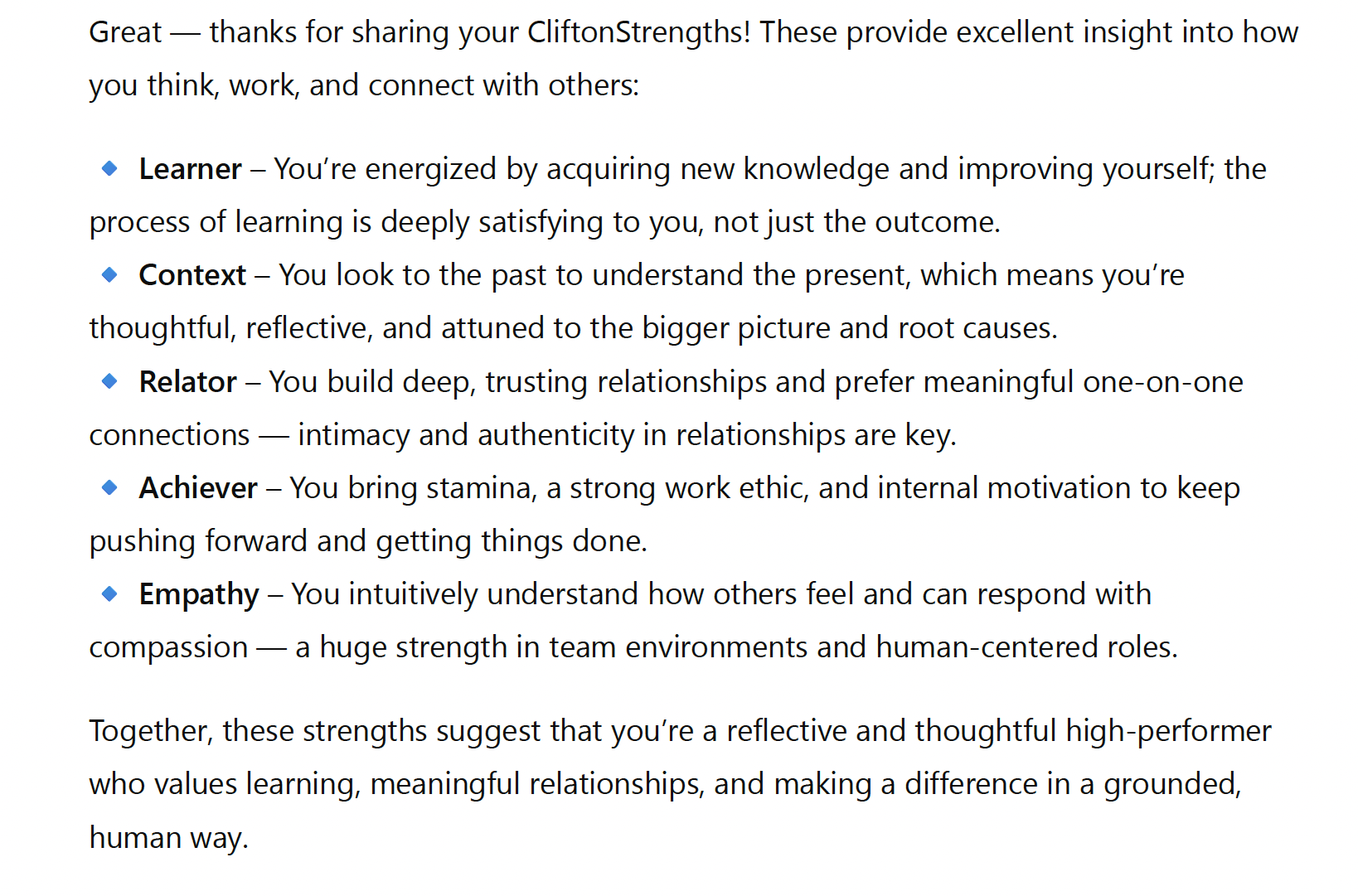
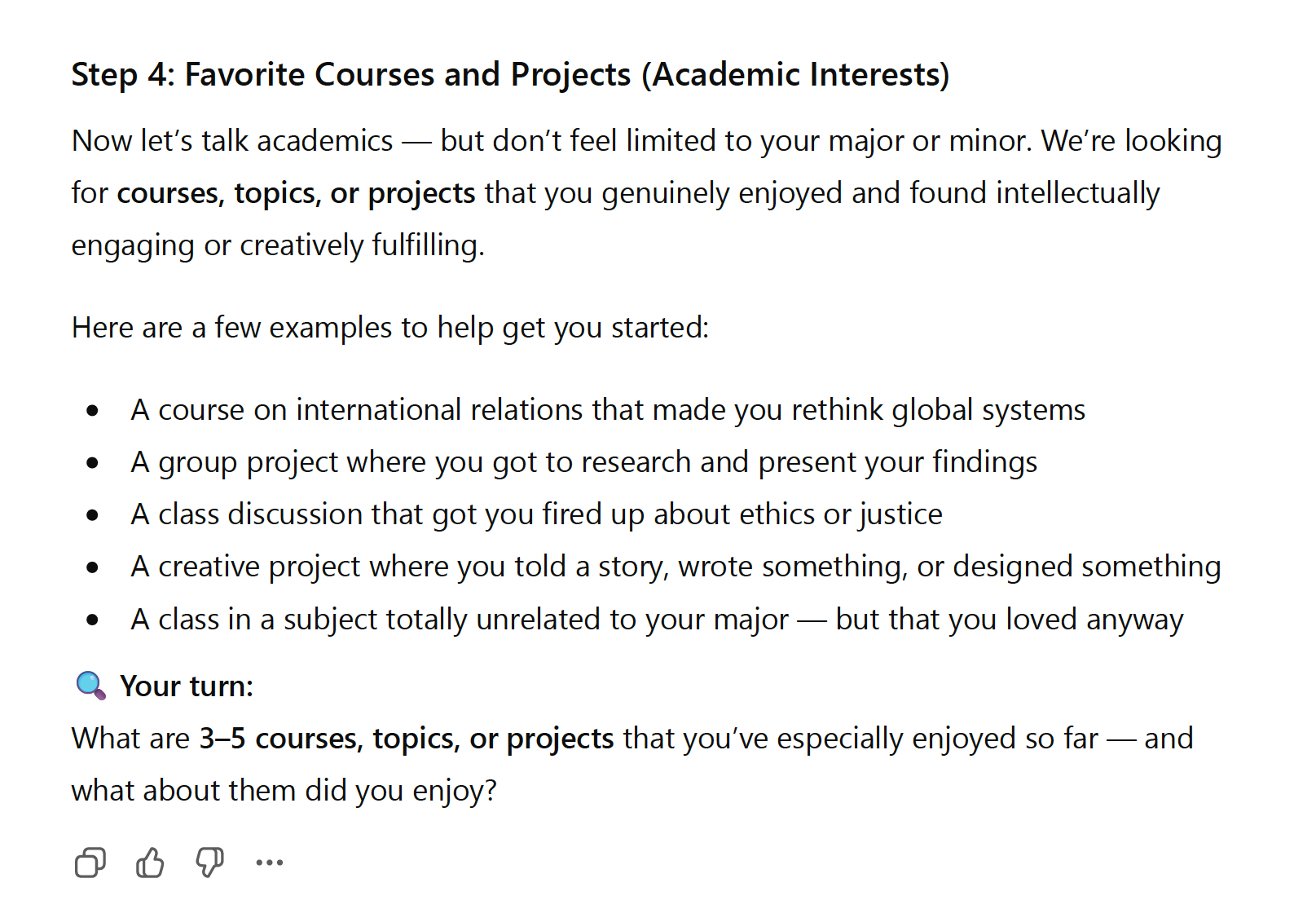
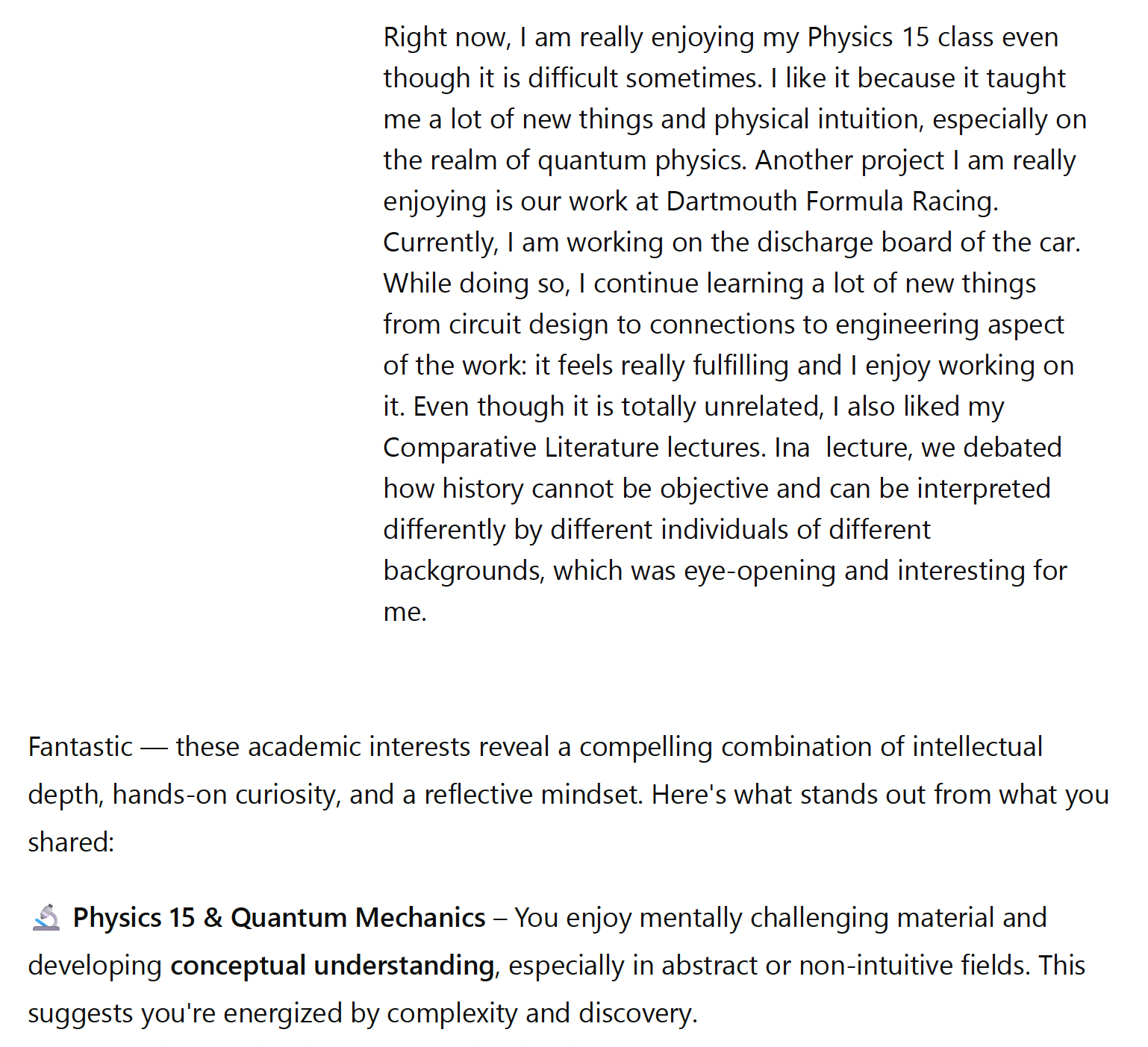
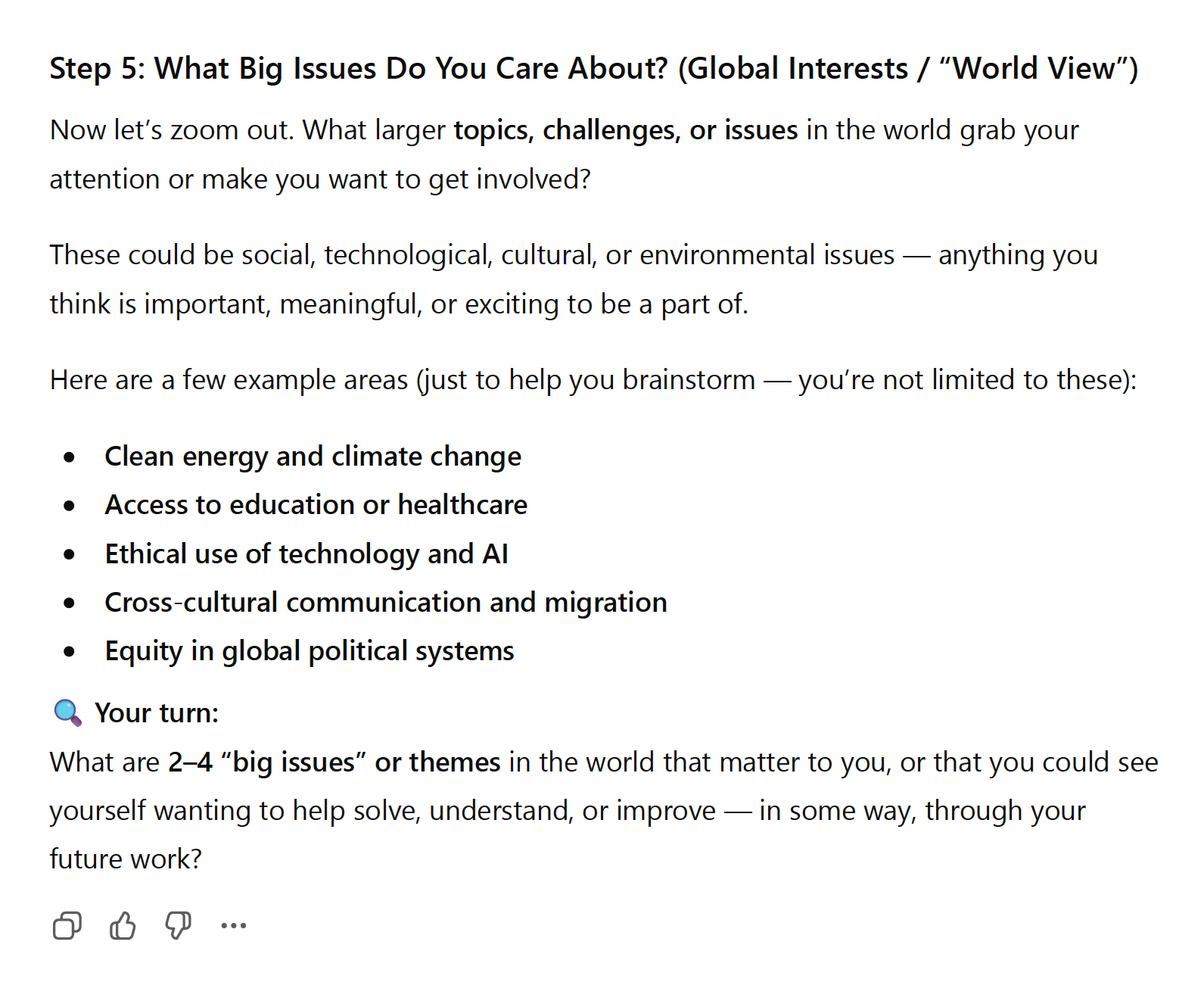
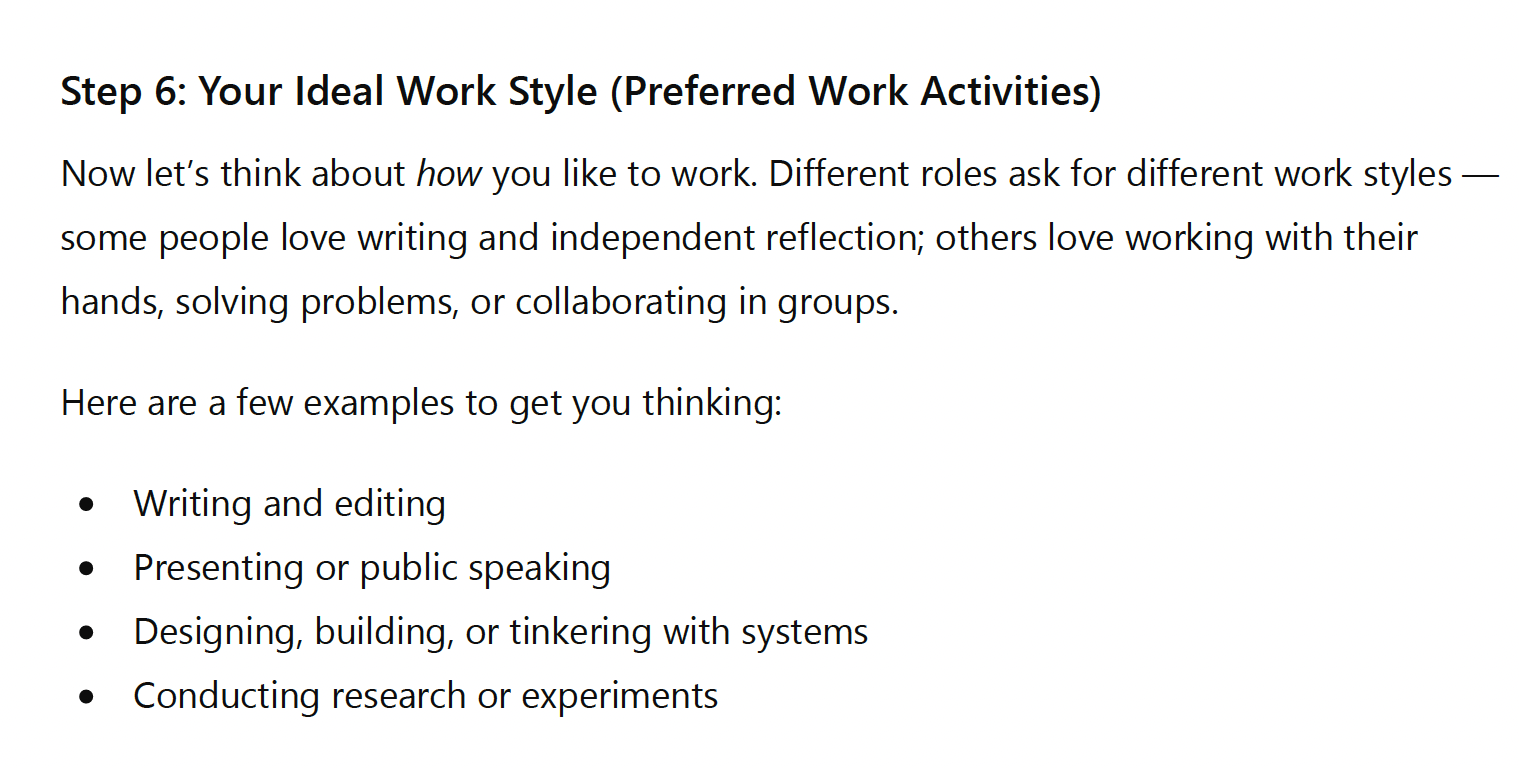
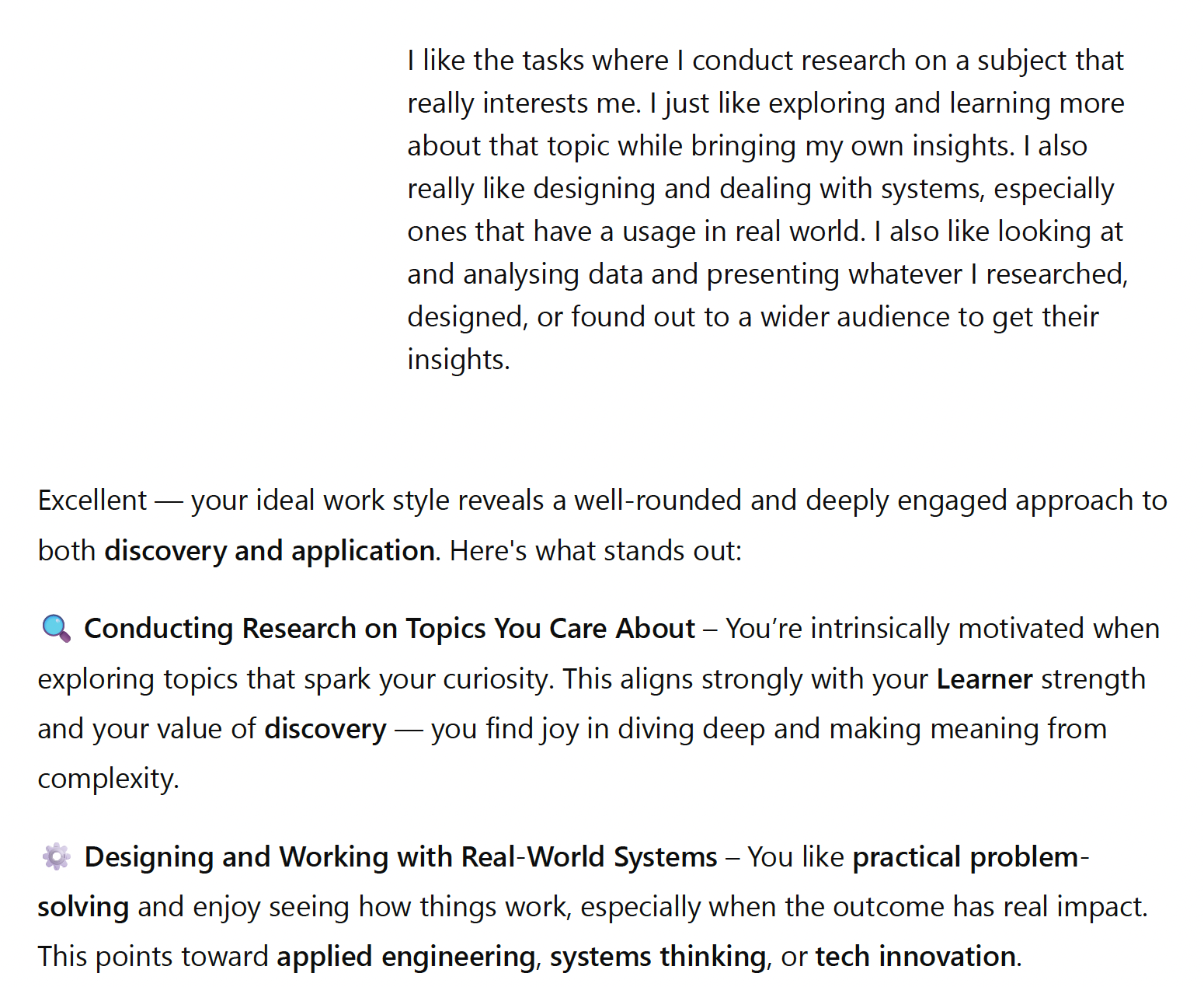
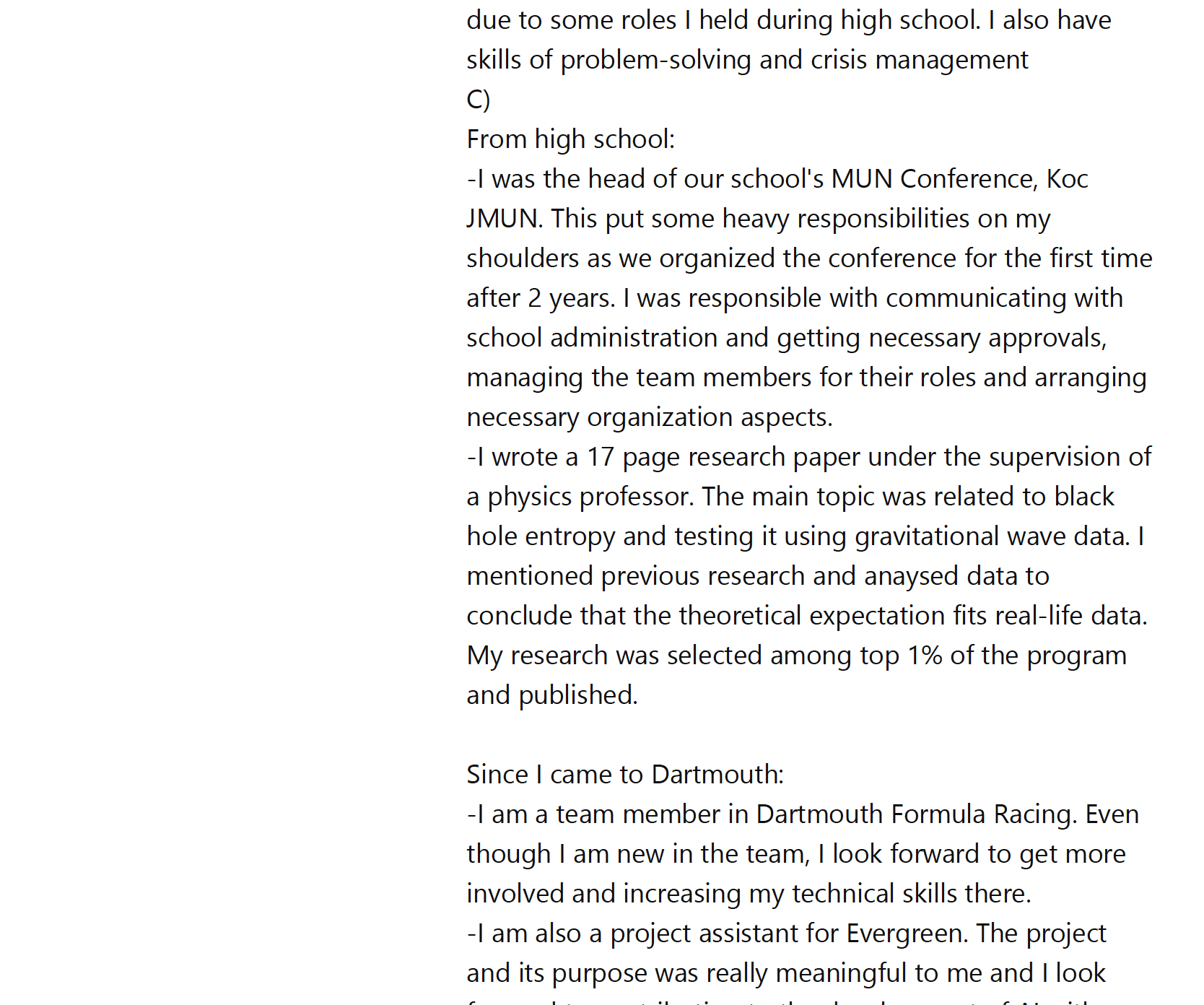
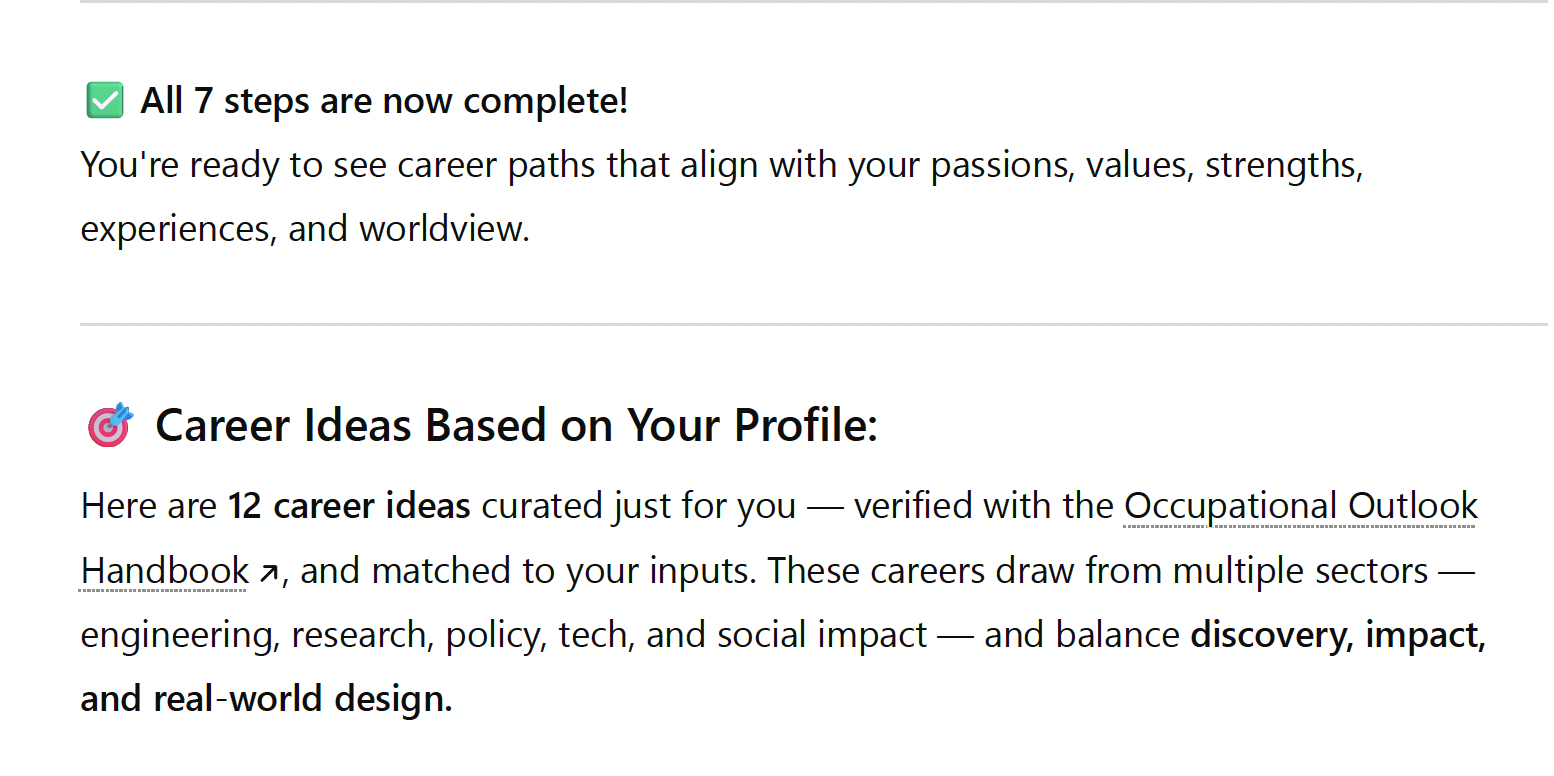
The AI Exploration Generator is a ChatGPT-based tool that guides students through a structured sequence of reflective prompts. Students explore themes such as values, strengths, interests, worldview, preferred work styles, and lived experiences.
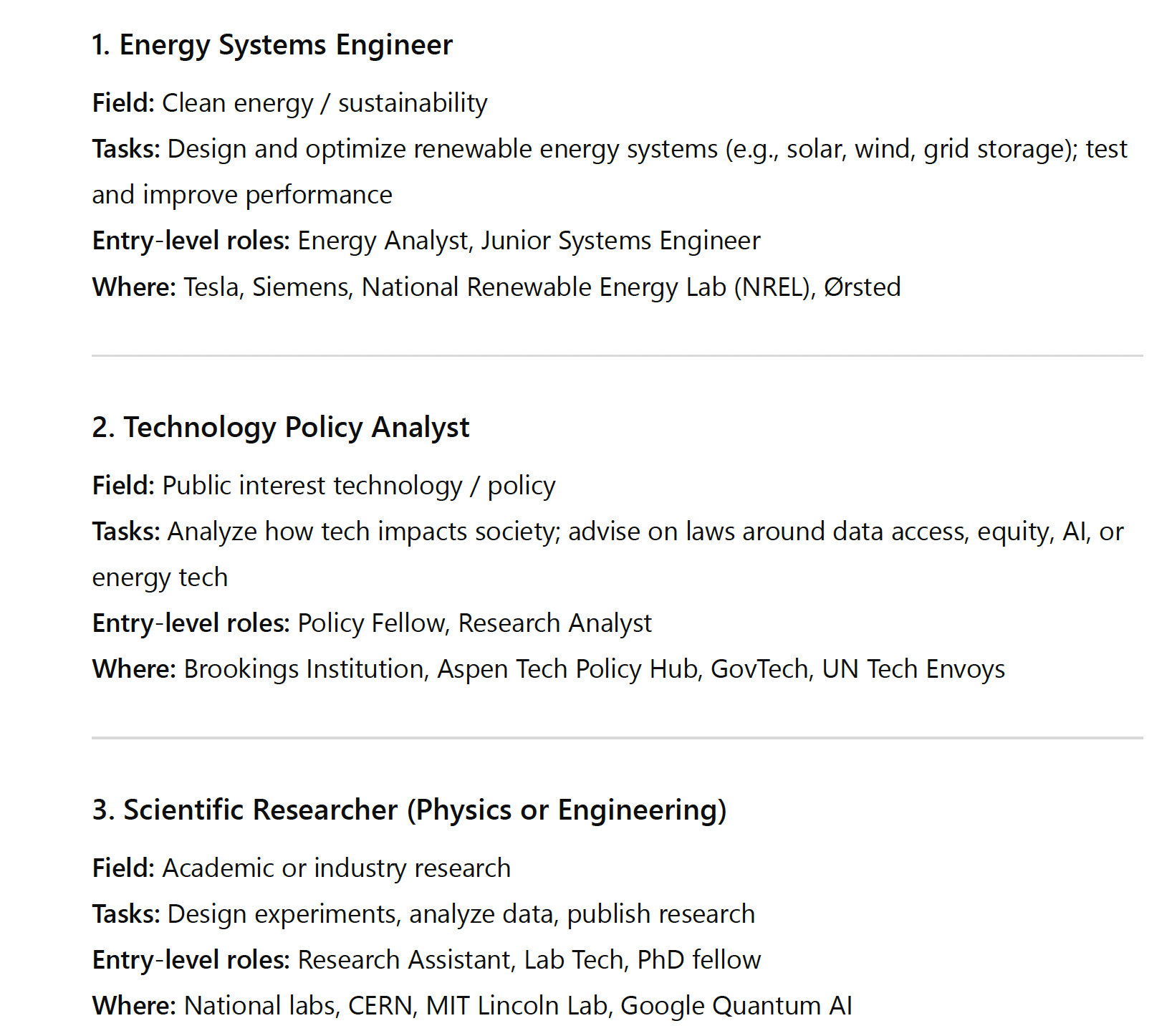
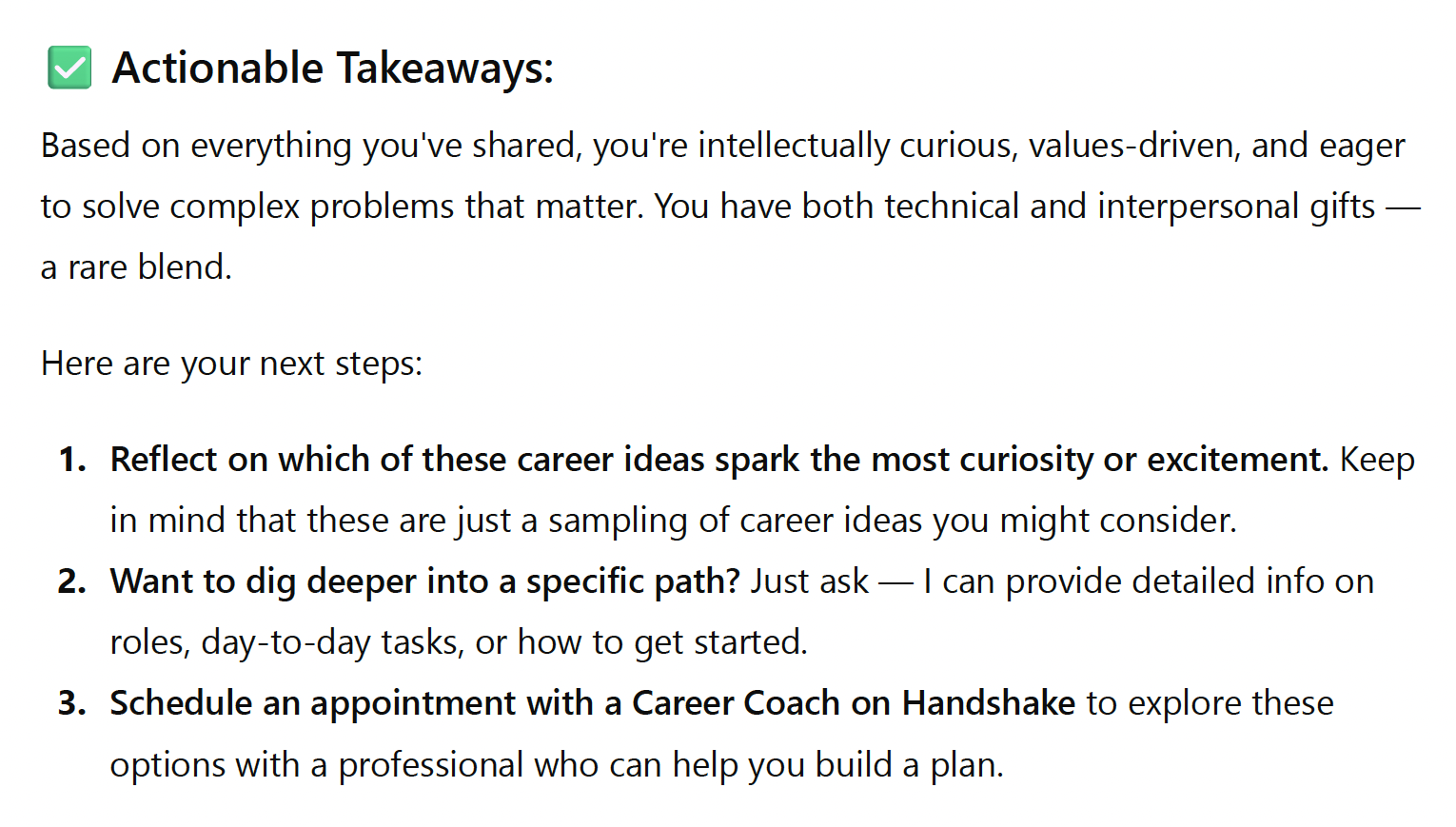
Rather than producing predictions, the system synthesizes responses into possible pathways that students interpret through facilitated dialogue. In this process, AI supports pattern recognition, while meaning-making remains human-led.
Seven Guided Prompts
1. What energizes you?
2. What do you value most?
3. What strengths feel most natural to you?
4. What academic topics or projects have engaged you the most?
5. What big issues or questions in the world matter to you?
6. How do you prefer to work?
7. What skills and experiences do you bring?

Outcome
The Launch Studio provides students with a clear, guided experience that helps externalize internal reflection, recognize patterns, and move from insight to action. Student feedback indicates increased clarity, reduced anxiety, and a stronger sense of agency in navigating academic and career decisions.
The system continues to evolve through iterative prototyping, observation, and refinement within a higher-education context.
Key Learnings
This project strengthened my interest in how digital tools, organizational systems, and reflective practices can be designed to work with human behavior rather than against it. Contributing to the Career Design Lab deepened my understanding of systems thinking, human–AI collaboration, and iterative design within institutional settings.